Move freely. Address pain at the source.
A structural approach to trauma, performance, and wellbeing.
I help your body move beyond
Persistent or recurring pain
Long-held tension & restriction
Old injuries & compensation patterns
Stress & nervous system overload
So you can move with greater freedom, energy and ease.
Feel the difference in your body.
Feel Lighter
Release long-held restriction and experience more space and freedom in your body.
Less Pain & Tension
Address restrictions and compensation patterns contributing to pain and tension.
Better Posture & Alignment
Restore structural balance and efficient alignment through the body.

Greater Flexibility & Mobility
Increase range of motion and move with greater freedom and ease.
More Energy & Vitality
Feel lighter and more energised as your body moves and functions with greater efficiency.
Regulated Nervous System
Feel safer and more settled in your body, with greater confidence, resilience and trust in yourself.
Deeper Sleep & Inner Peace
Sleep more deeply, experience greater calm and reconnect with the sense of peace already within you.
I know what it takes to rebuild
Lived experience, not just theory.
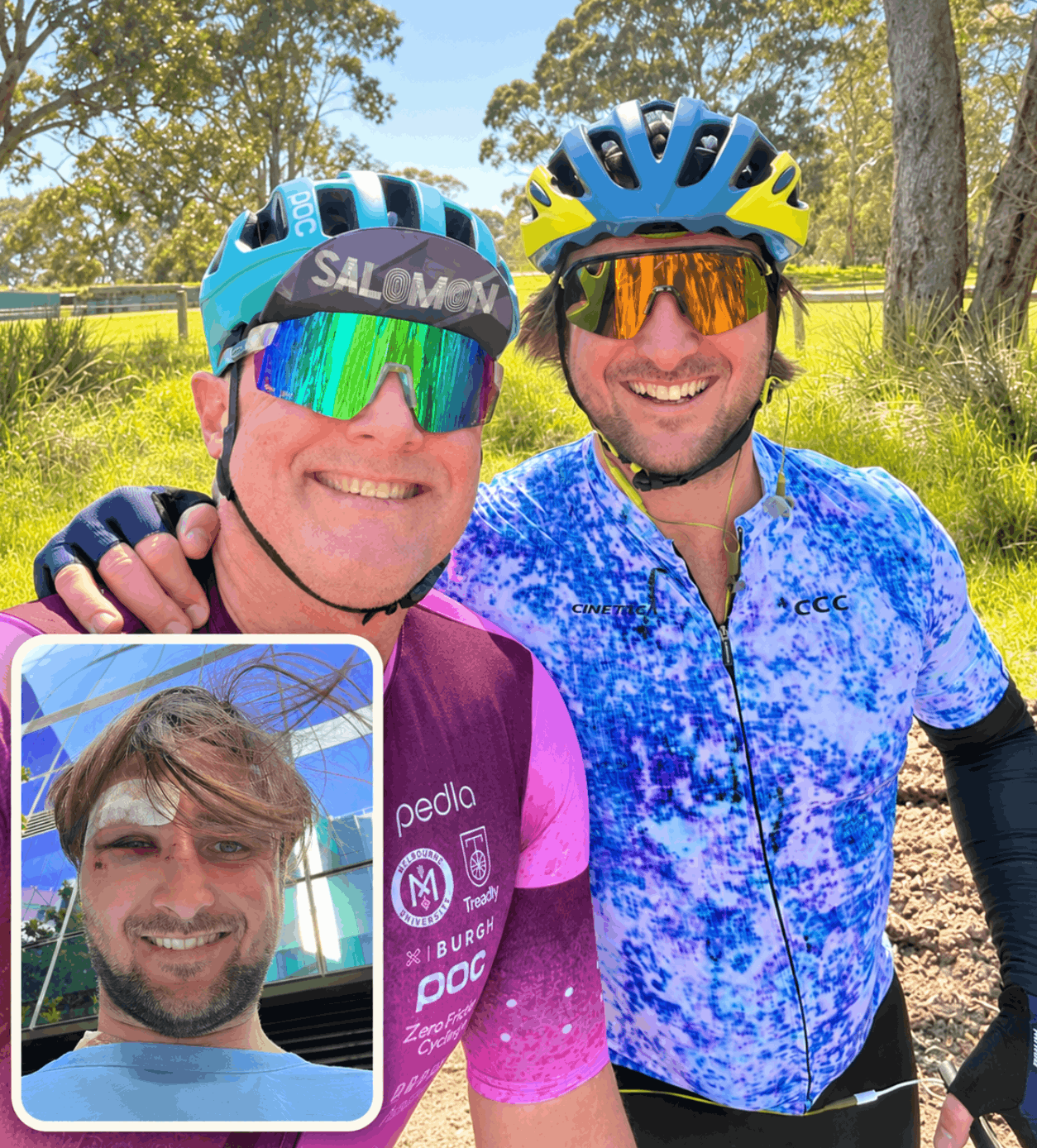
In January 2025, a near-fatal cycling accident left me with 11 fractured vertebrae, 10 broken ribs, fractures to both collarbones and shoulder blades, and a collapsed lung.
I surrendered fully into my healing journey. Within nine weeks, I was pain-free and able to run three kilometres and I am also back riding.
Combined with years of hands-on work across Australia and Costa Rica, including helping people living with decades of pain, my recovery deepened what I understand about the body’s capacity to heal. Lasting change does not come from forcing, but from listening, rebuilding trust and allowing the body time to adapt. I bring that lived understanding to every session.
Read my full story →
What to expect?
A simple guide to your bodywork experience.

Preparation
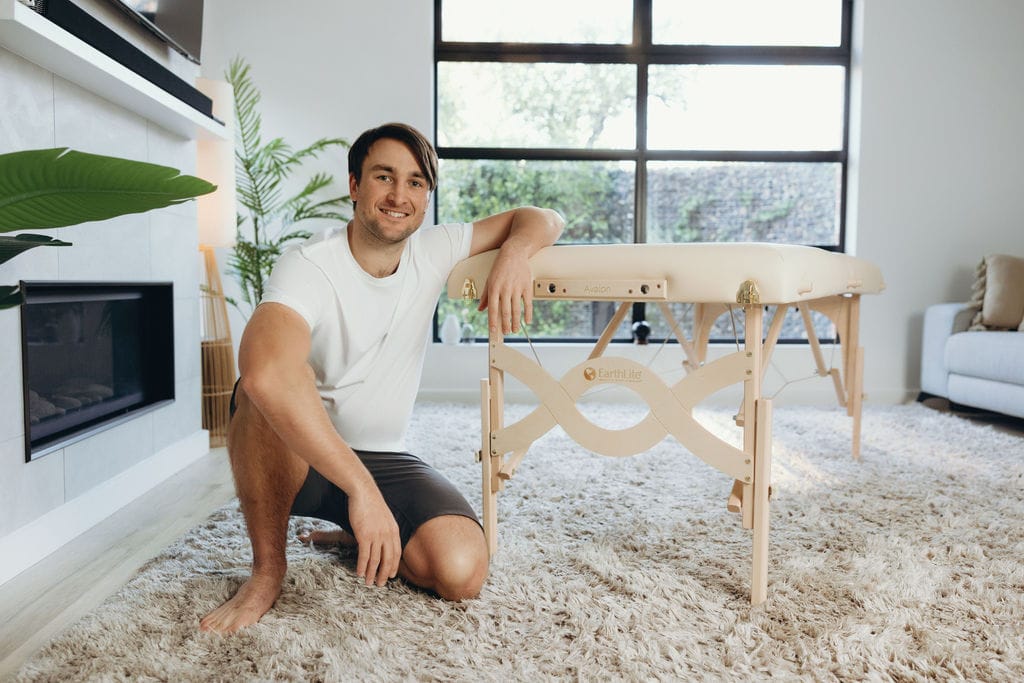
Sessions are held in a warm, private treatment room on a luxury Earthlite massage table.
Full undressing is recommended to allow unrestricted access to the fascial lines, though underwear is completely welcome. You’ll remain appropriately covered with sheets throughout the session for privacy and comfort.
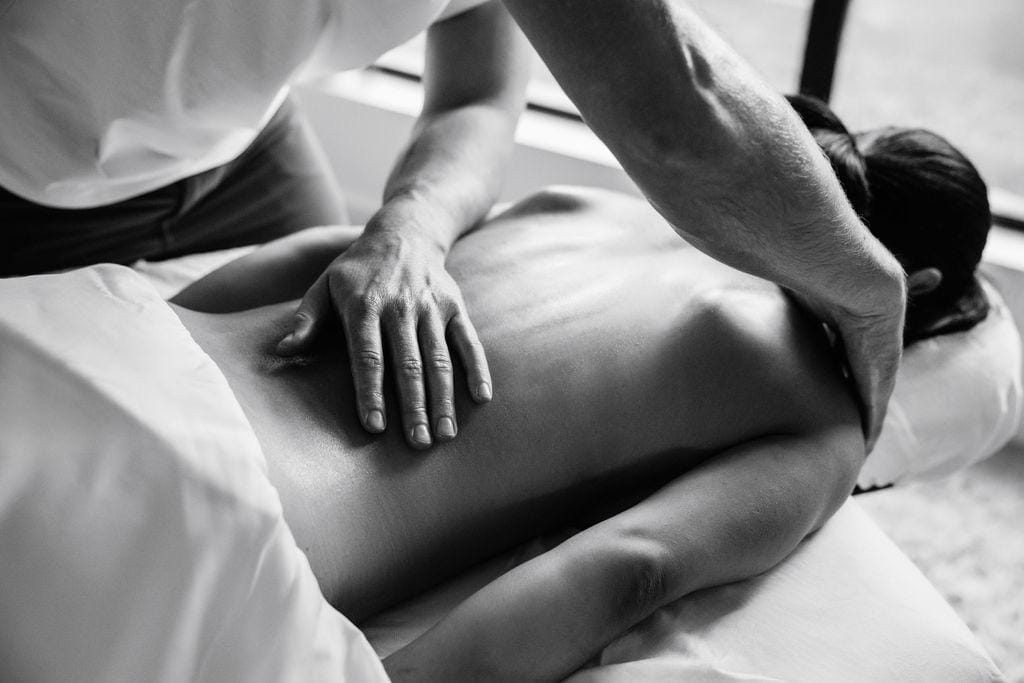
The Bodywork Experience
Every session is tailored to you. We begin with a body scan, then work slowly and intuitively with the patterns of tension and restriction present in your body.
There is no stretching or forceful manipulation. Most of the session is spent comfortably lying face up or face down, allowing your body to soften and receive the work.
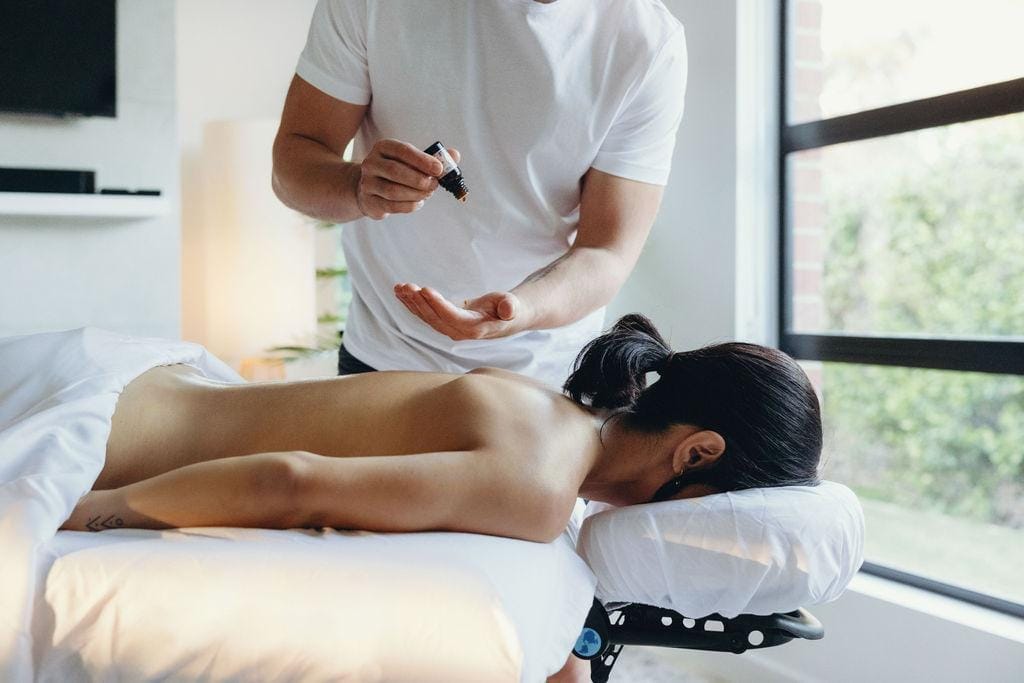
Integration
Please allow up to two hours for your session so the work can unfold at a natural, unhurried pace.
A minimum of 72 hours is required between sessions to allow your body and nervous system time to integrate and adapt. Around one week is recommended between your first few sessions.
5-Star rated by Clients on Google & Trustpilot
Myofascial Bodywork & Structural Integration
FASCIA is a living, responsive, intelligent network that weaves throughout your entire body, surrounding and supporting your muscles, bones, nerves and organs. When fascia becomes restricted, stiff or dehydrated, it can lose its natural glide, contributing to tension and restriction. Restoring movement and hydration supports greater freedom, circulation and lymphatic flow throughout the body.
THE SOMATIC FOX METHOD
Listen. Release. Integrate.
A body-led approach to lasting change.
These three principles guide how I work with the body.
01
LISTEN
ESTABLISH SAFETY AND TRUST
The body cannot fully let go while it still feels the need to protect itself. I listen through my hands to what your body and nervous system are communicating, allowing your body to set the pace. As safety is felt and trust builds through the process, deeper layers can begin to soften. This cannot be rushed or forced.
02
RELEASE
CLEAR THE ISSUES IN THE TISSUES
Through slow, sustained fascial work, we work together to unwind tension, restriction and the body armour formed through years of protection. This supports greater movement and flow through the tissues. I am not fixing you. I am supporting your body’s own capacity to release and heal.
03
INTEGRATE
LET CHANGE SETTLE AND LAST
Release is only part of the process. Integration gives your nervous system time to settle, your body time to adjust and your awareness time to deepen. From there, you can make more conscious choices that honour your body through self-care, self-love and everyday life.
A FREER BODY.
DEEPER POTENTIAL.
Above: Tom Myers, author and founder of Anatomy Trains, introduces the essential concepts behind the fascial map of the body. Note: This video contains images of a dissected cadaver.
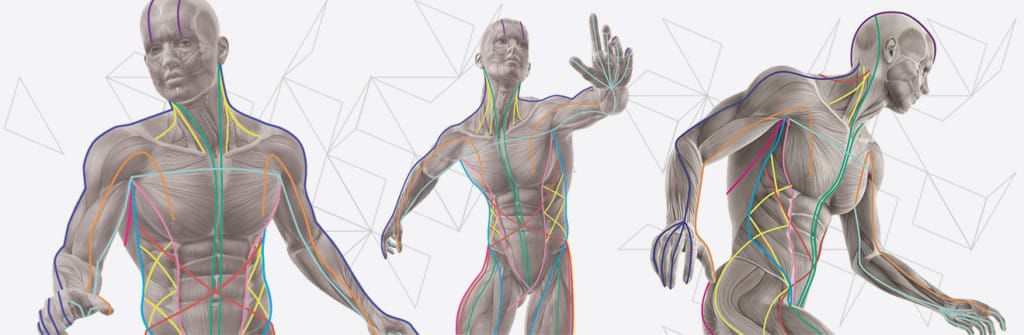
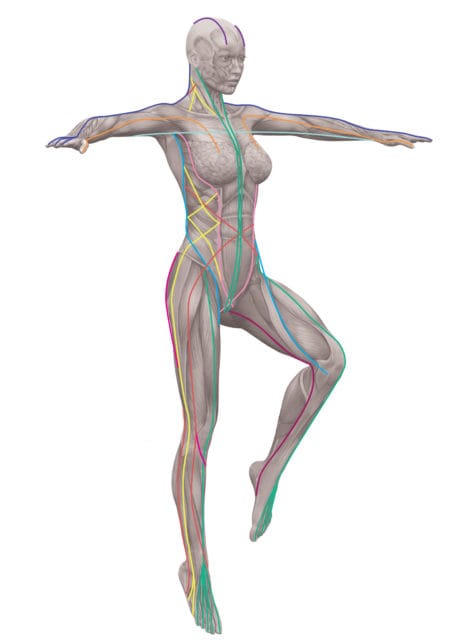
Above: A visual representation of the body’s fascial network, highlighting the body as an interconnected system.
Frequently asked questions
Have questions? Here are some of the most common questions about the work.
Structural Integration is a form of bodywork pioneered by Dr. Ida P. Rolf that works with the body’s connective tissue, or fascia, as an interconnected system.
Fascia surrounds and connects muscles, bones, nerves and other structures throughout the body. Tension or restriction in one area can influence movement, posture and load elsewhere, which is why I look beyond the place where pain or discomfort is being experienced.
Through slow, precise fascial work, Structural Integration aims to reduce restrictions, improve movement and support the body in finding greater balance, ease and adaptability.
Structural Integration can support people experiencing chronic pain, restricted movement, postural imbalances, persistent tension or a general sense that their body is working harder than it should.
I also work with athletes and active people wanting to improve movement, recovery and performance, as well as people whose bodies have been carrying the effects of prolonged stress or significant life experiences.
Because physical tension and nervous system state are closely interconnected, sessions can sometimes bring emotional shifts alongside physical ones. Clients often describe feeling lighter, calmer, more grounded and more connected to their bodies after the work.
You don’t need to be in pain to benefit. Some people come simply because they want to move, feel and function better.
There are certainly similarities to massage, but the approach, experience and results are quite different.
Rather than primarily working with the muscles, I work with the fascia, the connective tissue network that runs throughout your whole body.
The biggest difference is the pace, presence and way I listen to your body.
I work slowly and intuitively, adjusting moment by moment to how your tissues respond rather than forcing my way through tension.
This allows us to work deeply without needing to cause unnecessary pain or having your body brace against the pressure.
It’s a more thorough, whole-body and nourishing experience, with the time and space to work with what your body actually needs rather than following a standard massage routine.
Everyone responds differently, and results depend on your body, history and what you’re bringing to the work.
Clients commonly report reduced pain and tension, greater freedom of movement, improved posture and body awareness, deeper sleep, increased energy and a greater sense of calm and connection with themselves.
Some people experience a noticeable shift after their first session, while longer-held patterns often respond best to a series of sessions that gives the body time to adapt and integrate.
The intention is not to force change, but to create the conditions for your body to reorganise with greater ease, freedom and resilience.
Structural Integration doesn’t need to be painful to be effective.
At times we may work at what I describe as the hedonic point: the meeting place between intensity and pleasure where you can still breathe, soften and remain present with what you’re experiencing.
The aim is never to overpower the body. I work slowly and patiently, using enough pressure for the fascia and nervous system to respond while continually listening to your body and adjusting in real time.
A large part of my approach is intuitive touch. I’m highly present throughout the session and pay close attention to subtle changes in breathing, tissue response, tension and nervous system state. This allows me to work at the pace your body is ready for rather than forcing it to conform to a technique or predetermined level of pressure.
Some areas may feel intense, particularly where tension has been held for a long time, but clients consistently describe the work as manageable and deeply relaxing. I have never had a client end a session early because the work was too intense or ask me to use less pressure.
Your sense of safety remains central throughout the session, because meaningful release is far more likely when the body feels safe enough to let go.
There is no predetermined number of sessions that every body needs. Healing cannot be measured neatly in minutes, and I cannot honestly predict exactly what your body will require before we begin.
Everyone starts with one full session, with no obligation to continue or commit to a package upfront. A single session can create a meaningful shift and allows you to experience the work for yourself.
This is the most direct approach I have found for supporting deep, lasting change. However, building trust, working through the whole body and unwinding years of protective holding cannot reasonably be rushed or forced.
The pace of change also depends on your body’s readiness, the consistency of the process and your willingness and capacity to engage with it. This is collaborative work.
Based on more than a decade of learning and years of working with a wide range of clients, I recommend the three-session Somatic Reset for most people. It provides the continuity needed to work progressively through the body while allowing time for integration.
If you continue, everything already paid is credited towards the next pathway. Your initial session becomes the first of the three-session Reset, and the Reset becomes the first three sessions of the full 10-session journey. You only pay the difference.
The 10-session Structural Integration journey is for those wanting to unwind long-standing patterns more deeply. It is ideally completed over 3–6 months, with flexibility when needed and 12 months to use all sessions.
Some people feel complete after the Reset. Others continue or return when their body needs further support. Ultimately, I want you to feel well and function freely as soon as possible, with greater resilience and self-sufficiency rather than dependence on ongoing treatment.
Sessions are booked within a spacious two-hour window. The hands-on bodywork typically lasts around 60–90 minutes, with additional time available for conversation, assessment and integration as needed.
Rather than working to the clock, the session is allowed to unfold at a natural pace based on what your body needs and can process that day.
My approach has been shaped by decades of combined knowledge from Structural Integration, Anatomy Trains, movement, natural healing and somatic practice.
John Benedict has been one of the most important hands-on influences on my work. A Structural Integration practitioner with decades of clinical experience, John came to the work following injuries sustained as a US Navy deep-sea diver, later studying at the College of Healing Arts and apprenticing with Structural Integration practitioner and Olympic athlete Craig Nelson.
While living in Costa Rica, I received extensive hands-on work from John, learning primarily through experiencing the work in my own body. This became an important foundation for how I understand fascia and Structural Integration.
Tom Myers, founder of Anatomy Trains, has also deeply influenced my understanding of fascia, whole-body movement and structural relationships. I have studied Anatomy Trains technique and BodyReading training, alongside a series of specialised dissection workshops exploring the body's fascial and anatomical connections firsthand.
Carol Bittner, my mother, gave me my earliest exposure to bodywork and natural healing. A massage and beauty therapist who later became an advanced practitioner of Ortho-Bionomy, she introduced me from childhood to holistic wellbeing, natural healing and the importance of nourishing the body through healthy food and conscious living.
Dr Joe Dispenza is an international author, speaker and educator exploring the connection between mind, body and personal transformation. I became an advanced student of his work and attended his Advanced Workshop in Australia in 2018.
Sri Ramana Maharshi and Mooji have deeply influenced how I see the world through their teachings on presence, self-inquiry and our deeper nature.
Together, these influences have shaped an approach that is structural but not mechanical, intuitive without losing precision, and grounded in treating the body as an interconnected whole.
My relationship with the body has been shaped by a lifetime of movement, performance, discipline and, ultimately, healing.
Before becoming a bodyworker, I served as an Australian Army officer and competed nationally in duathlon, cross country, road cycling and mountain biking. I also represented the Army ski team.
Movement and physical performance have been part of my life for as long as I can remember, but over time my interest expanded beyond what the body could do into understanding how it adapts, protects, heals and holds our experiences.
My path into natural healing began long before I practised professionally. My mother was a bodyworker, and after leaving the military I explored an increasingly broad range of approaches to health, human potential, somatic awareness and mind-body integration.
I later spent four years living in Costa Rica, where I trained extensively in Structural Integration with John Benedict, developed my private practice and worked with clients at HOLOS retreat centre in the Diamante Valley. I subsequently continued my Structural Integration education with Tom Myers and Anatomy Trains based in the United States.
Then, in January 2025, everything I had learned became deeply personal.
I was involved in a near-fatal cycling accident, fracturing 11 vertebrae, 10 ribs, both collarbones and both scapulae, as well as collapsing my left lung. I chose a non-surgical path and committed myself fully to rehabilitation, movement, somatic practice and supporting my body's natural capacity to heal.
Nine weeks after the accident, I ran 3km pain-free.
That experience fundamentally deepened my understanding of recovery. I know what it is to inhabit a body that has experienced significant trauma, to rebuild trust in it and to discover that our current limitations do not necessarily define what is possible.
Today, from my practice in West Hindmarsh, Adelaide, I bring together Structural Integration, movement, nervous system awareness, intuition and lived experience to help people move beyond persistent patterns of pain and tension and reconnect with greater freedom in their bodies and themselves.
A PATHWAY TO
Lasting Change
INITIAL SESSION
$400
NEW CLIENT RATE
(Save $200)
Up to 2 hours
Tailored to your needs
Experience the Somatic Fox Method
No ongoing commitment
FIRST-SESSION GUARANTEE
Allow 72 hours for your body to integrate. If you notice no relief, your money back.
SOMATIC RESET
$2,500
5 SESSIONS
(Save $500)
Progressive whole-body work
Unwind protective holding and body armour
Deeper release than one session allows
Spaced 3–10 days apart so benefits compound and changes integrate
READY TO GO DEEPER?
Your initial session is fully credited toward the 5-session Somatic Reset.
Referral Gift
When you refer someone who books their first paid session, you'll receive a $100 credit toward your next booking. Credits can be stacked
Community Offering
Each month, one initial session is offered at a 50% community care rate for someone experiencing genuine financial hardship. Contact me to apply.
More client transformations
Real stories from clients who have experienced profound changes through fascia bodywork.
Ready to begin?
You don’t need to have it all figured out. If you feel drawn to the work, trust that curiosity. You’re welcome to reach out and we can take it from there.
West Hindmarsh, Adelaide | By appointment only
Monday: 3pm or 5pm
Tuesday–Thursday: 9am, 12pm or 3pm
Limited 5pm appointments available by arrangement
Saturday: Reserved primarily for Journey clients and people travelling from outside Adelaide
Email: callum@healthandvitality.co
Sessions are confirmed once payment is received.
West Hindmarsh, Adelaide
By appointment only
Monday: 3pm or 5pm
Tuesday–Thursday: 9am, 12pm or 3pm
Limited 5pm appointments available by arrangement
Saturday: Reserved primarily for Journey clients and people travelling from outside Adelaide
Email: callum@healthandvitality.co
Sessions are confirmed once payment is received.

© 2026 Health and Vitality - All rights reserved.